
Every restaurant wants faster service, fewer mistakes, and a calmer kitchen. But most of the time, loss doesn’t come from big problems. It comes from small inefficiencies that add up shift after shift.
The good news? A few simple kitchen workflow fixes can save hours every week without adding staff or changing your menu.
Here’s where to start.
1. Simplify Prep Stations
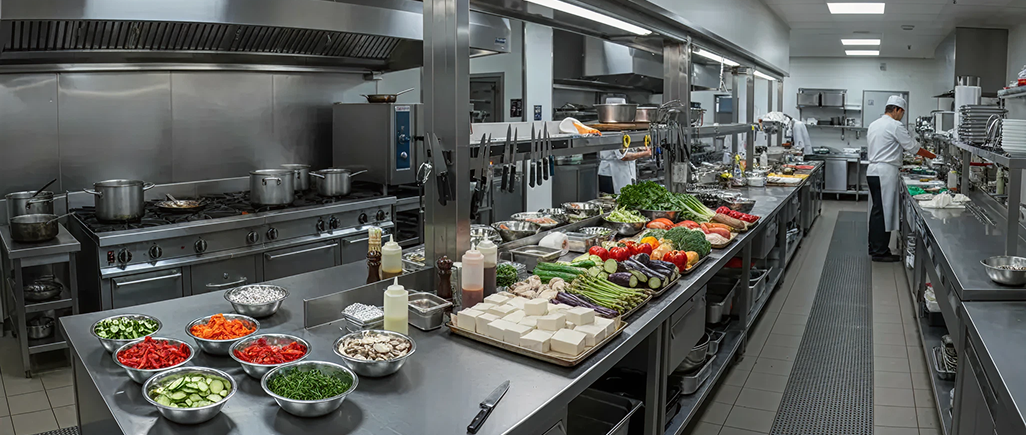
If staff are walking back and forth for tools or ingredients, time is being wasted.
Group tools, ingredients, and containers by task. Each prep station should have everything needed to finish a job without leaving the area.
2. Standardize Where Things Live
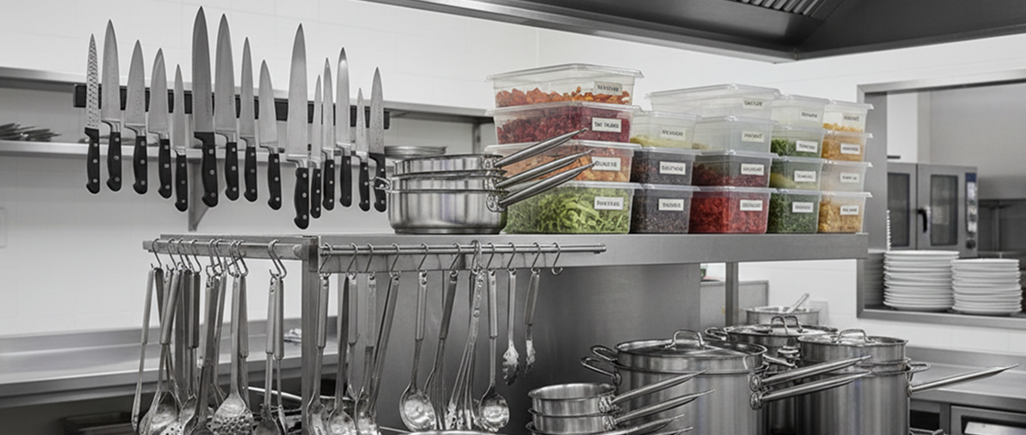
When items move around, staff slows down.
Knives, cookware, containers, and utensils should always return to the same spot. Consistency reduces searching, confusion, and training time for new hires.
3. Prep in Batches
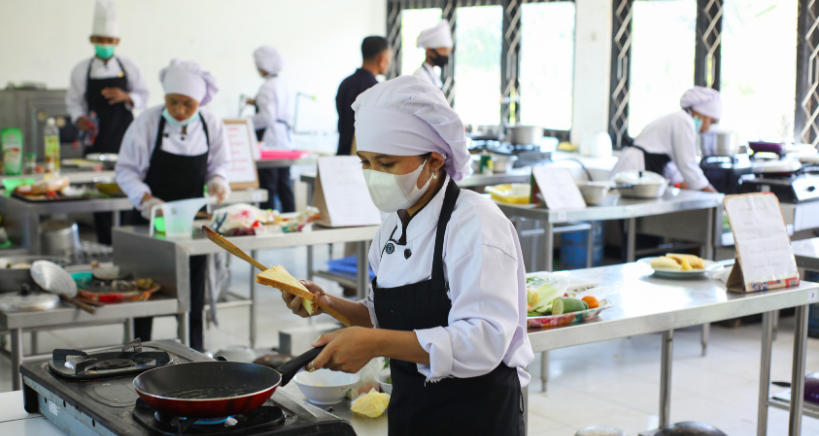
Small prep jobs repeated all day ruins momentum.
Batch tasks like chopping, portioning, or sauce prep during slower hours. Fewer interruptions during service means faster ticket times and less stress.
4. Label Everything Clearly
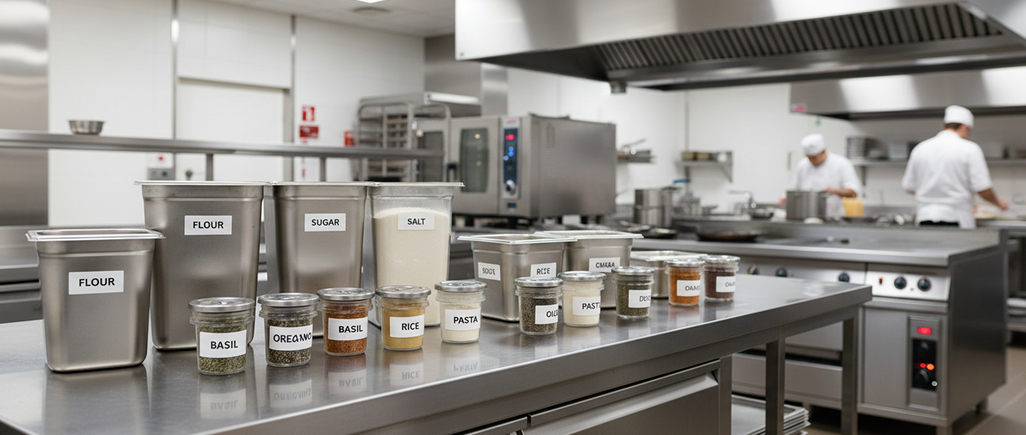
Unlabeled containers can lead to mistakes and delays.
Label prepped food, sauces, and storage bins with names and dates. Clear labeling improves speed, food safety, and confidence during busy shifts.
5. Reduce Menu Bottlenecks
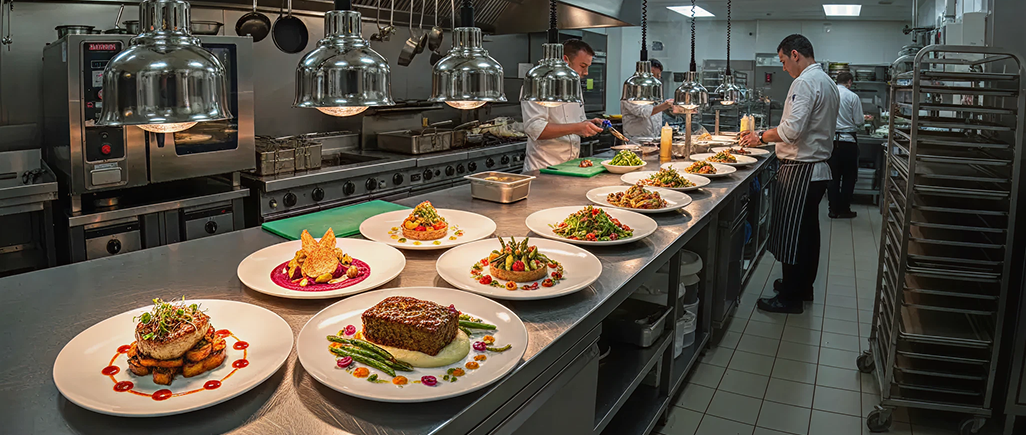
If one station always backs up, the menu may be the issue.
Identify dishes that slow down service or require too many steps. Simplifying or adjusting those items can dramatically improve overall flow.
6. Keep High-Use Items Within Reach
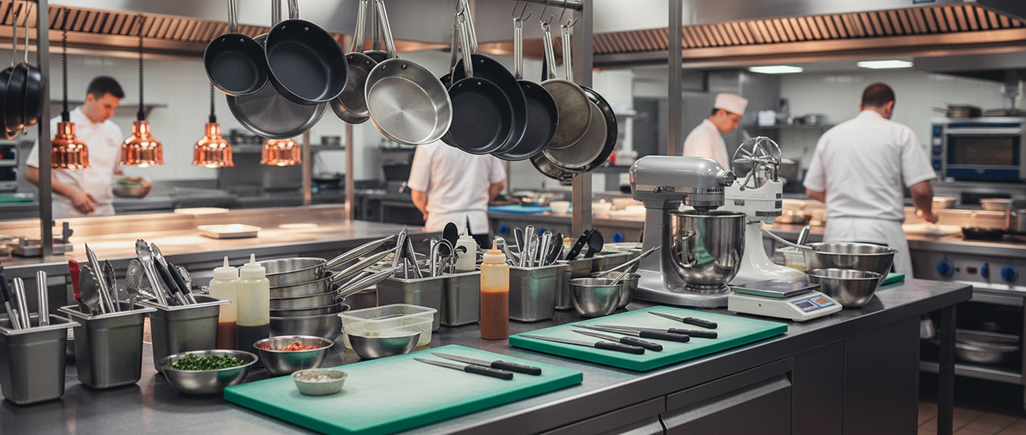
The most-used tools should never be far away.
Store high-volume utensils, pans, and containers at arm’s length. Less movement equals faster output and less fatigue.
7. Tighten the Order Assembly Area
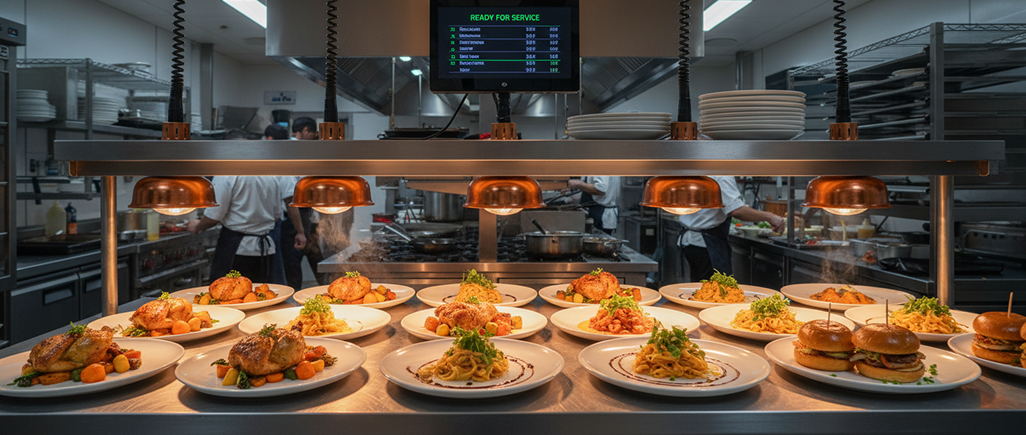
A cluttered pass slows everything down.
Assign worktables for plating and order assembly. Keep only what’s needed to finish dishes and pack orders.
8. Use Checklists for Opening and Closing
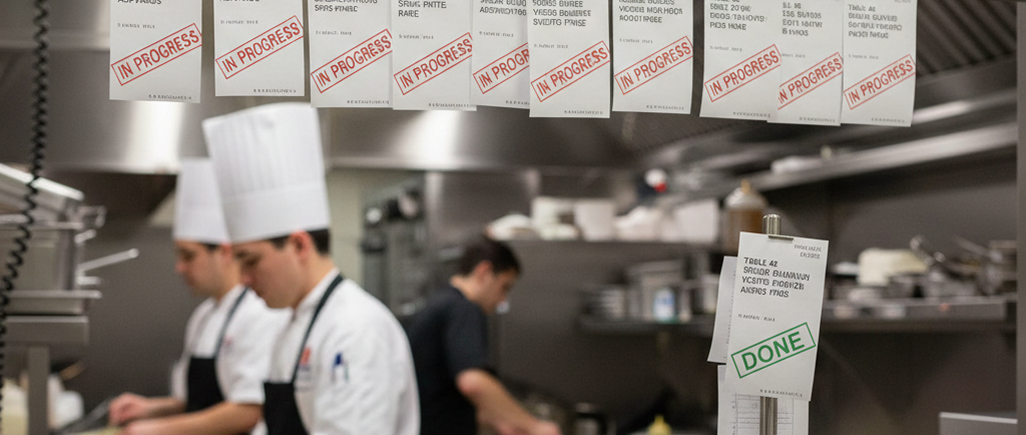
Missed steps cost time later.
Simple opening and closing checklists keep prep consistent and prevent delays during service. They also make training easier.
9. Watch One Busy Shift
The fastest way to spot problems is to observe.
During a rush, note where staff stop, wait, or double back. Those moments point directly to workflow fixes worth making.
10. Fix One Thing at a Time
Trying to change everything at once rarely works.
Pick one bottleneck, fix it, and move on to the next. Small improvements compound quickly.
Make Your Kitchen Work Smarter
Better kitchen workflow doesn’t mean working harder. It means removing friction so your team can move faster with less stress.
Tighten your setup, simplify your process, and your kitchen will save hours every week—without sacrificing quality.